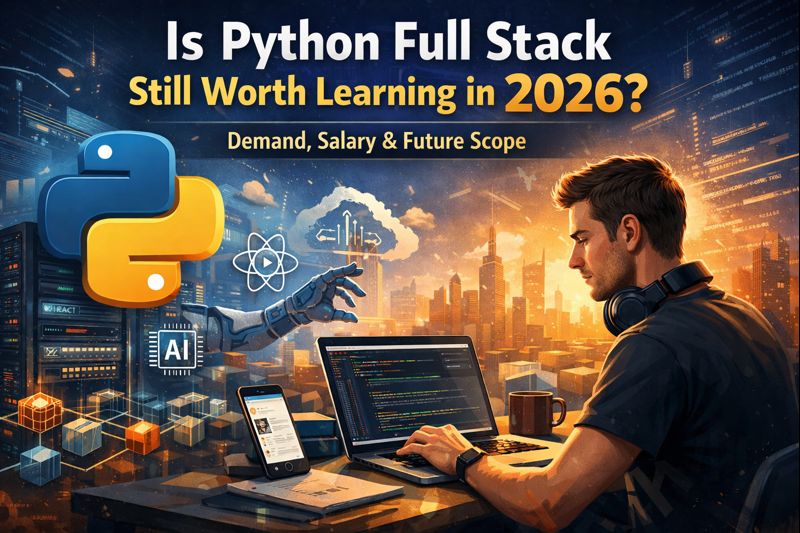
In 2026, as AI, cloud computing, and edge technologies reshape the tech landscape, one question keeps aspiring developers awake at night: Is Python Full Stack still worth learning? The short answer is a confident yes. With Python’s versatility and the growing need for developers who can manage both front-end and back-end tasks, mastering Python Full Stack remains a smart, future-proof career move.
What Makes Python web development Unique?
Python web development empowers you to handle end-to-end application building. On the backend, Python frameworks like Django, Flask, and FastAPI manage databases, APIs, and server logic. On the front-end, you integrate HTML, CSS, JavaScript, or frameworks like React and Next.js to deliver interactive user experiences. This combination makes Python web development developers highly adaptable—capable of building scalable websites, AI-driven apps, and cloud-integrated platforms.
Demand for Python web development in 2026
The demand for Python web development
continues to soar. Industries like AI, fintech, healthcare, and EdTech actively seek professionals who can bridge data-heavy backends with responsive frontends. According to reports, there are over 200,000 annual openings for Python web development roles globally, and remote-first companies increasingly prefer developers who can deliver full solutions without large teams.
Key demand drivers include:
AI Integration: Python is the leading language for machine learning and AI. Developers who can embed LLMs or predictive algorithms into web applications are highly sought after.
Cloud & Serverless Adoption: Companies leverage AWS, Azure, and serverless architectures, requiring Python web development
expertise.
Startups & SMEs: Smaller teams prefer versatile developers who can manage full applications, cutting costs while speeding up product delivery.
Salary Trends for Python Full Stack Developers
Python web development skills command premium pay in 2026. Entry-level salaries start around ₹5–8 LPA in India and $85K–$105K USD globally. Mid-level developers with cloud or AI experience earn ₹10–22 LPA or $110K–$140K, while senior Python web development engineers can reach ₹25–45 LPA or $160K–$210K. Freelancers with AI-integrated projects often charge $50–120/hour.
The key takeaway: Python web development pays well not just because of coding, but due to the ability to deliver complete, scalable, and AI-ready applications.
Future Scope: Why Python web development Skills Will Remain Relevant
Python web development
is more than web development. By 2026, the scope includes:
- AI-Powered Apps: Build intelligent chatbots, predictive dashboards, or personalized e-commerce platforms.
- Cloud-Native Development: Serverless frameworks and cloud deployment skills make your applications highly scalable.
- Cross-Platform Integration: Tools like Tauri and Electron allow Python web development apps to run on desktop and mobile seamlessly.
Skills Roadmap to Master Python Full Stack
To stand out in 2026, focus on:
- Core Skills: Python 3.12+, Django/Flask/FastAPI, React/Vue.
- Advanced Skills: PostgreSQL/MongoDB, Docker/Kubernetes, GraphQL, serverless deployment.
- Emerging Tools: AI libraries (TensorFlow, PyTorch, LangChain), GitHub Copilot, OAuth/JWT for security.
- Portfolio: Build 3–5 live projects—AI chatbots, SaaS tools, or cloud apps—to demonstrate end-to-end capabilities.
Following this roadmap can accelerate your entry into high-paying roles and freelance opportunities.
Conclusion: Is Python Full Stack Worth It in 2026?
Absolutely. Python web development combines high demand, attractive salaries, and future-ready skill sets. Whether you aim for Big Tech, a startup, or freelance AI projects, mastering Python web development ensures you stay relevant, versatile, and competitive.
If you invest in this skill today, you’re not just learning to code—you’re learning to build the intelligent, scalable applications of tomorrow.